What Equity Actually Is (to me)
1.1 Understanding the Difference
For a long time, I didn’t really understand the difference between equality and equity. It wasn’t that I didn’t care – I just hadn’t had it explained in a way that really landed.
I was brought up by a very strong-willed mother, who got heavily involved in trying to change things she felt passionate about, so I always felt as though I was a feminist. Then I became a mother myself, to two boys (as opposed to the two girls my mother had), and I was determined to make sure they grew up having massive respect for women.
However, when they started to reach their mid-teens around 2020, I started to see and feel something very unexpected. I could see that some men and boys were really struggling with this new world they felt we were living in. A world where my boys (who-weren’t-quite-men-yet), and their peers, were often hearing the message that ‘in order for women and girls to have equality, men and boys will lose out’. What the ‘something’ was that they would lose, varied vastly depending on who was providing the information, but I started to see and hear a real backlash and campaign towards ‘traditional values’, and comments like ‘it’s the natural way of things for women to be the caregivers’ as well as arguments about ‘boys these days being brought up to be weak’ – when really, the intention was more about encouragement towards understanding emotional intelligence and the power of vulnerability.
So there were these awful opposing views: some argued that gender equality would disrupt traditional roles, while others believed it was essential for fairness and progress.
I started to do my own research and read more about what this meant for me as the mother of two boys – how could I make sure they weren’t overly influenced by these opposing voices, but instead grew up to have balanced thinking around gender equality? I won’t lie – it was an onerous challenge for a while, especially as the lone female voice around the dinner table, and sometimes they would all think it was ‘funny’ (we are a very humour-heavy family and, love it or hate it, we enjoy a good bit of sarcasm and winding each other up!) to joke ‘here she goes again!’ when I would try to talk about things I was reading, about what boys and men were being fed on social media etc, about equality and feminism. Things could become heated when I didn’t know how to find the right words that didn’t come across as inflammatory or that might have felt like judgement to my sons, and my husband.
There were times I felt deflated, and exhausted – angry even, that the burden seemed to be on me as a woman to try to help them all see the other gender perspective. This all led to more learning for me along the way – understanding how much more inequitable things could be for people who didn’t identify as either male or female, or who were LGBTQIA+.
All of this research and learning eventually led to this piece of writing, after I wandered naively like Alice in Wonderland down all the rabbit holes of inequality, including ethnicity, socioeconomic status, disability, age, religious beliefs, migration status, educational status, and neurodiversity. I was surprised to find myself identifying with more of those minorities than I expected, and I realised how wildly different my life had been compared to others I knew – and in a way I had been completely oblivious to. Still thinking if I just knew enough, I could fix it all.
But the more I read, the less I was skipping like Alice at the start of her journey.
I started dragging my feet along, reading more and more about the dark side of gender (and other) imbalances. Falling and spiralling down those rabbit holes. Looking back on my own life – recognising things I’d missed or ignored that had been deeply unfair – because of the fact that I was a girl or a woman – or realising that some of the things I’d been talking to my boys about – thinking I was helping – actually may have made them feel judged.
I became incredibly disheartened for a long time, feeling like it was all too much, and deeply disappointed in myself that I couldn’t clearly figure out how I could help. There were so many areas where I had no experience or perspective, even though I could see the similarities with other inequitable groups that I did identify with. I felt completely out of my depth, and quite honestly, my health started to deteriorate, as I desperately tried to figure out how to fix everything, for everyone who was in any way disadvantaged. A ‘classic feminine trait’ apparently – helping everyone but myself. Ah yes, another stereotype that didn’t help solve anything.
I read articles that talked about equity, and I honestly didn’t even stop then to think about dictionary definitions (I will often check what a word means before I confirm it with my kids – I consider myself a huge lover of words, but I’m still partial to checking my facts!). I knew what equity meant, didn’t I? It’s pretty much the same as equality isn’t it – all about fairness?
I can’t put my finger on what it was that stopped me in my tracks around the difference.
I just had a moment one day when I did a search online to clarify my thinking around it all.
What I found was the beginning of a bigger lesson to understand the two words/subjects and how they differ – although initially it also felt like too much to absorb, and I think I pushed it to the side. (On a neurodiverse side note – that’s often how I handle big topics that I know my brain doesn’t have time for right now – I used to call it ‘procrastination’ and feel guilty for it, but I’ve realised it’s more likely a combination of overwhelm and some need for creative thinking time.)
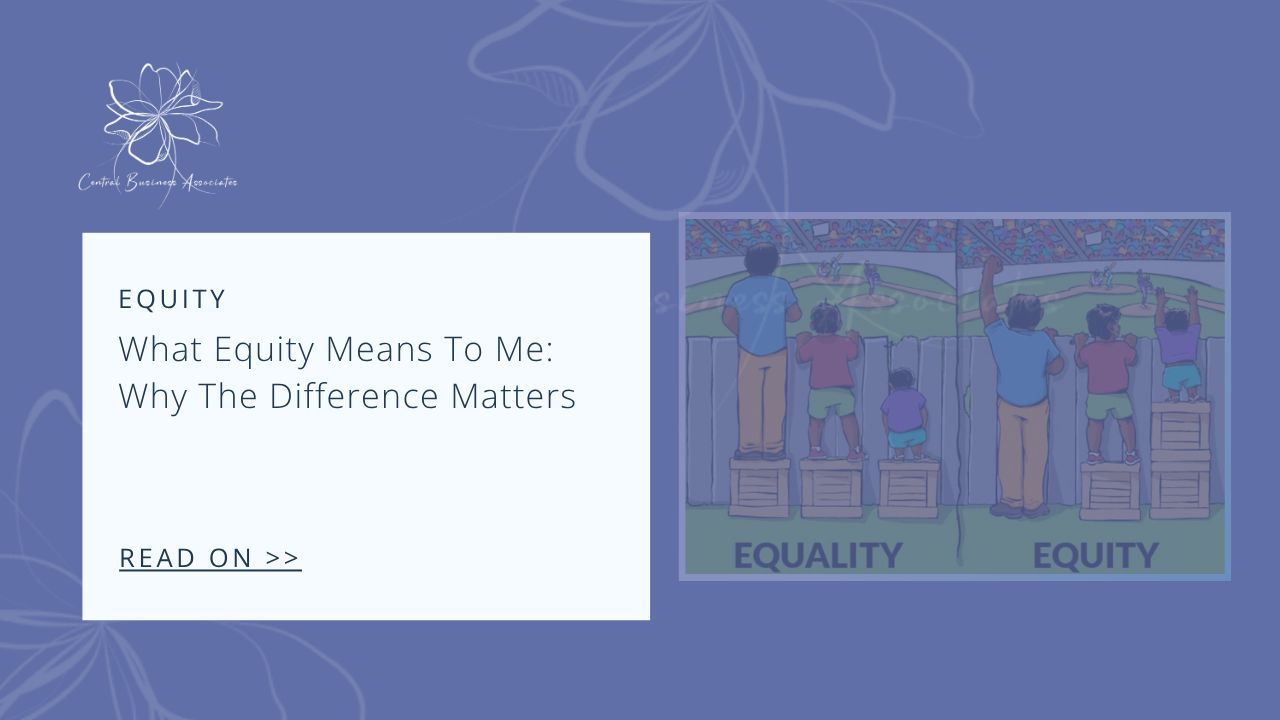
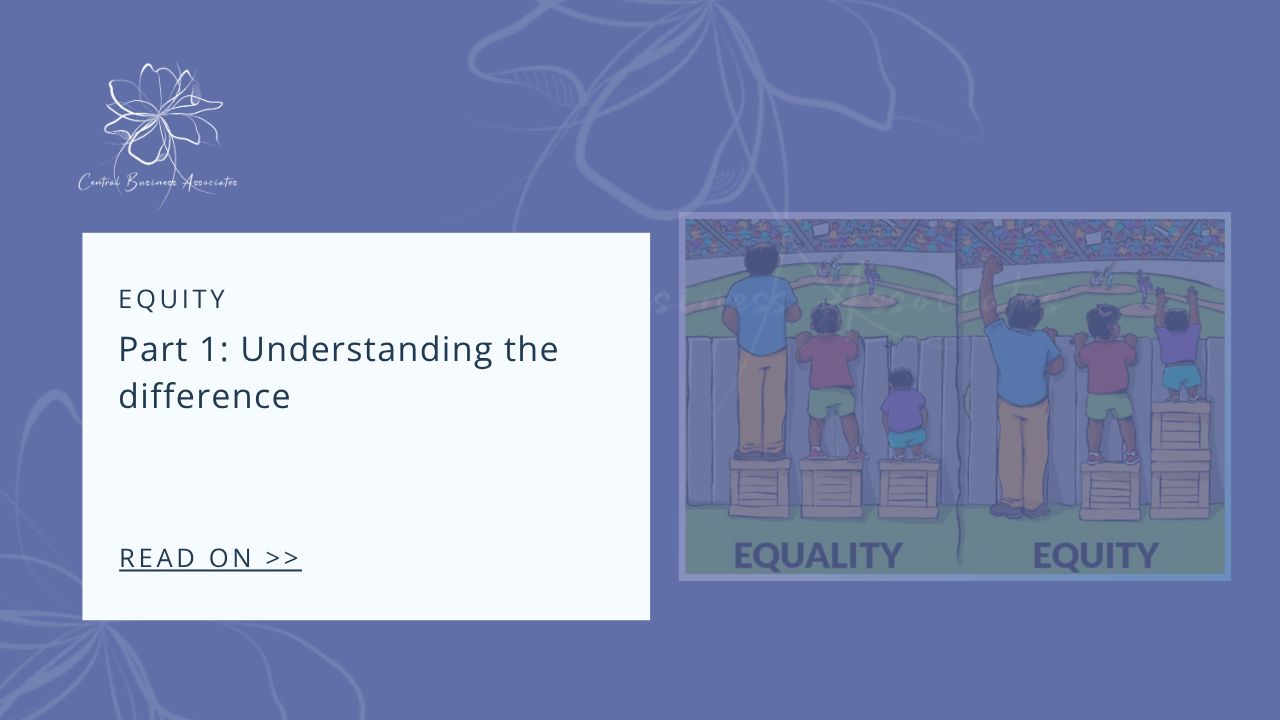
When I later tried to research (on a presumably creative-thinking day) to understand better, I came across this simple, and powerful, graphic that so effortlessly explained so much.
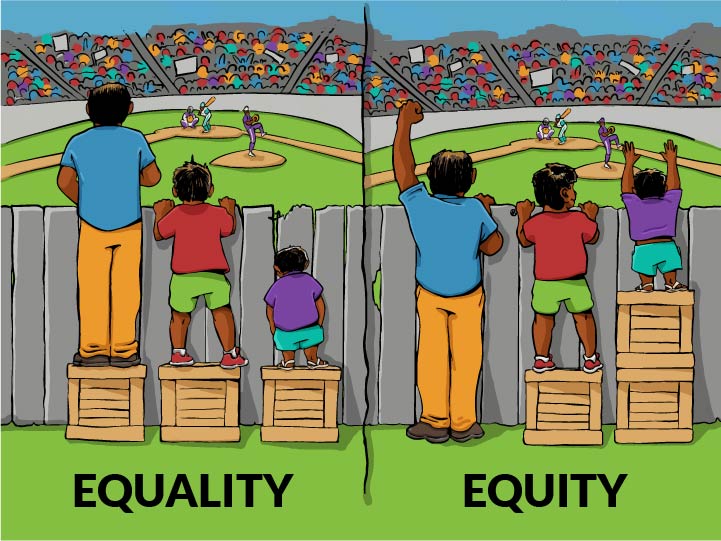
Here’s how I think about it now:
- Equality is giving everyone the same resources or opportunities.
- Equity is giving people what they actually need to have the same chance at success – because not everyone starts from the same place.
You may already be familiar with this, but I hope it’s helped even one person to think about things from a different perspective.
In the next episode, I’ll move into talking about Why it Matters.
(This is the first part in a series – the introduction to the series is here)